WIPO’s Copyright, Creative Economy and IP Governance took part in the 5th World Conference on Creative Economy (WCCE 2026), hosted by the Government of Indonesia in Jakarta from October 21 to 23, 2026.
The World Conference on Creative Economy was first held in Bali in 2018 and contributed to the adoption of the first United Nations resolution on the creative economy for sustainable development in 2019. Its 2026 edition registered more than 9,000 participants, with over 7,000 following online. Participants came from 82 countries and seven international organizations. The program comprised more than 60 sessions with more than 183 speakers.
The conference concluded with the Jakarta Vision on Creative Economy, endorsed by the Ministerial Meetings. It was prepared through a public consultation and an online forum with 292 participants from 42 countries. Its central aim is to place the creative economy on the future global development agenda, including the agenda after 2030. The Vision sets out priorities in six areas: technology and artificial intelligence; sustainability and the circular economy; inclusion and community empowerment; intellectual property (IP) and the protection of creators' rights; finance, trade and markets; and measurement. Shortly after its endorsement, the Vision was brought to New York to inform the discussions of the Second Committee of the United Nations General Assembly on the resolution on the creative economy.
Several of these priorities are close to WIPO's work on the creative economy. On IP, the Vision calls for fair and transparent IP systems with equitable remuneration for creators, for the valuation of intangible assets to enable IP-backed financing, and for capacity building so that developing countries can earn from their creativity through IP rights. On measurement, it calls for a shared framework that reflects the economic, social, cultural and environmental impacts of the creative economy, drawing on administrative data on IP registration as well as surveys and practical indicators. WIPO supports countries in this area through its Creative Economy Data Program, and creators through WIPO for Creators.
Messages from WIPO's leadership
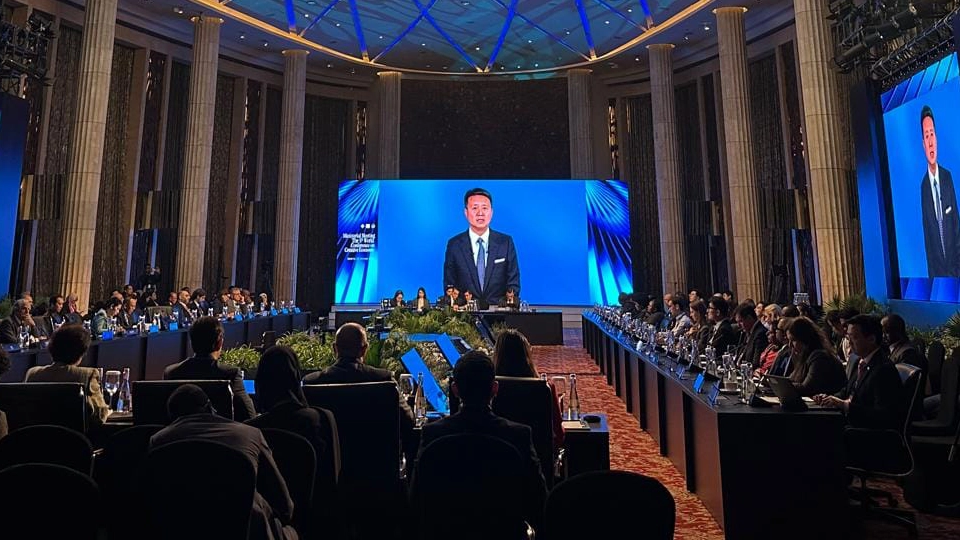
Mr. Daren Tang, WIPO Director General, addressed the Ministerial Meeting by video message. He highlighted the opportunities of the creative economy and the importance of continued collaboration with Indonesia, and recalled Indonesia's leading role in placing the creative economy on the global agenda.
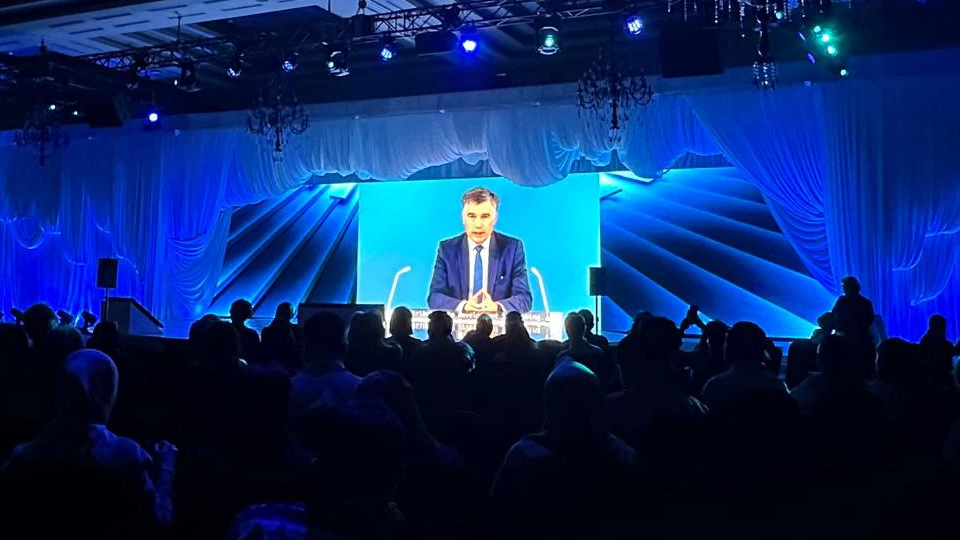
In a video message to the plenary, Mr. Pascal Faure, WIPO Deputy Director General, Copyright, Creative Economy and IP Governance Sector, emphasized the importance of evidence-based policies and of intellectual property (IP). He noted that policy is only as strong as the evidence it rests on, and that IP rights are what turn creative work into income for creators.
Launch of the Indonesia–WIPO Creative Economy Country Report
On October 23, the Ministry of Creative Economy and WIPO presented the executive summary of the Indonesia–WIPO Creative Economy Country Report, prepared by the Ministry in collaboration with WIPO. It was one of three initiatives that the Ministry launched at the conference.
H.E. Teuku Riefky Harsya, Minister of Creative Economy, said that the potential of the creative economy must be supported by strong evidence in order to understand the ecosystem, identify gaps and guide policy. He added that growth alone is not enough and that creators should obtain greater value from their work.
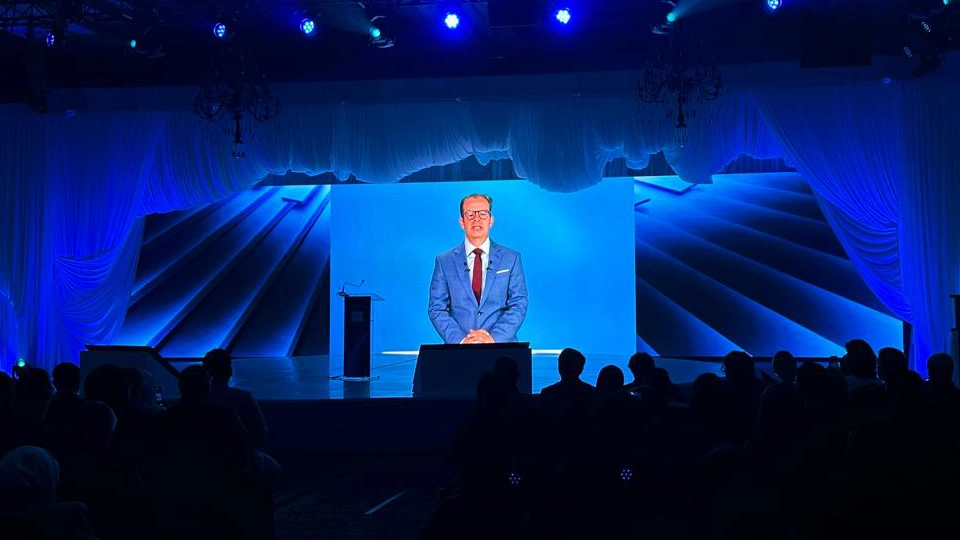
Mr. Sacha Wunsch-Vincent, Director of Creative Economy, WIPO, addressed the launch by video message. Drawing on the experience of the Global Innovation Index (GII), he noted that a report makes a difference when governments use it to improve policies, strengthen coordination across ministries and monitor progress over time. Mr. Dominic Matar, Senior Product and Project Manager, WIPO for Creators, delivered WIPO's remarks and received the report on behalf of WIPO. On the same day, Mr. Matar led the WIPO for Creators session "The Business of Creativity".
According to the executive summary, the creative economy accounted for 7.4 percent of Indonesia's gross domestic product (GDP) and 18.7 percent of national employment in 2025. Investment in the creative economy reached Rp 183 trillion in 2025, 3.6 times its 2021 level.
The report applies WIPO’s “Stronger Evidence, Smarter Policy: The WIPO Ecosystem Approach to the Creative Economy”, which builds on WIPO’s experience with the Global Innovation Index (GII) to assess the conditions that enable creativity to generate economic and social value. Indonesia is the second country to benefit from this approach, following the Philippines, whose country report, The Creative Ecosystem of the Philippines, was published in June 2026. WIPO will continue to support the Ministry of Creative Economy in following up on the report’s findings and monitoring progress.
Panel on creative economy measurement
On October 22, WIPO’s Creative Economy team held the panel "Better Data for Better Policies: An Ecosystem Approach to Creative Economy Measurement", moderated by Ms. Giulia Campi of WIPO's Creative Economy Data Program. The speakers were:
• Mr. Paolo Federico A. Ramos, Deputy Executive Director, Philippine Creative Industries Development Council (PCIDC) Secretariat, Department of Trade and Industry (DTI), the Philippines;
• Ms. Mauliandini Nur Noviasri, Team Leader for Culture and Design Research, Directorate of Strategic Research and Management, Ministry of Creative Economy, Indonesia;
• Dr. Elvy Maria Manurung, Permanent Lecturer, Creative Business Department, Parahyangan Catholic University (UNPAR), and Secretary General of Higher Education of Creative Economy in Indonesia.
photo
The three speakers brought complementary perspectives. Mr. Ramos spoke from the experience of the Philippines, whose country report was published in June 2026, and where the Department of Trade and Industry hosts the Secretariat of the Philippine Creative Industries Development Council. Ms. Noviasri spoke from the Ministry of Creative Economy, which prepared the Indonesian report in collaboration with WIPO. Dr. Manurung spoke from the university sector, as Secretary General of Higher Education of Creative Economy in Indonesia, the network of universities working on the creative economy.
The panelists stressed that an ecosystem approach matters because it looks at the conditions behind the numbers: figures on GDP, jobs and exports show the size of the creative economy, while the conditions show what supports it and what holds it back. The approach also shows the connections between subsectors. An animation character, for example, can create business opportunities in games, publishing, fashion and merchandise, so the same intellectual property can generate value in different markets.
The panelists saw IP-backed finance as a key opportunity for creative businesses, many of which are small or informal, and discussed what it requires: clear ownership, business skills, reliable income records and credible IP valuation. The speakers from the Philippines and Indonesia said that the work on the country reports had helped agencies and departments coordinate around shared evidence. Looking ahead, the panelists pointed to new data needs on how creators earn on digital platforms, how artificial intelligence changes creative work, and who captures the value.
The final message is clear: stronger evidence leads to smarter policy. And when governments understand what drives the creative economy, they are better equipped to support its creators and ensure they can capture more of the value they generate.